

How a custom folding knife is made, from 3D design to prototype
Every custom knife we make follows the same path. An idea becomes a 3D model, the 3D model becomes a hand-finished prototype, and the approved prototype becomes the reference for production. This post goes through each stage, with photos and video from our workshop in Taichung, Taiwan.
1. The brief
It starts with what you send us. That can be a finished drawing, a rough sketch, a photo of a knife you like, or one of our existing models with a list of changes. We need to know the blade length and shape, the lock type, the steel and handle material you have in mind, where your logo goes and roughly how many knives you plan to order. If any of that is still open, we can suggest options. Our post on the parts of a knife you can customise lists them.
2. 3D design
Next we model the knife in 3D. A realistic rendering lets you see the knife from every angle, open and closed, before any steel is cut. Each part of a folding knife is modelled separately (blade, liners, handle scales, pivot and clip), so we can check how the parts fit and move together and change one part without redrawing the rest.
This is the cheapest stage to make changes. Moving a thumb stud or reshaping a handle on screen takes hours; changing it after the tooling is made costs far more.
3. Handmade prototype
Once you approve the design, we make a prototype. At this stage parts such as the handle scales are shaped by hand, so we can adjust how the knife feels without waiting for production tooling.
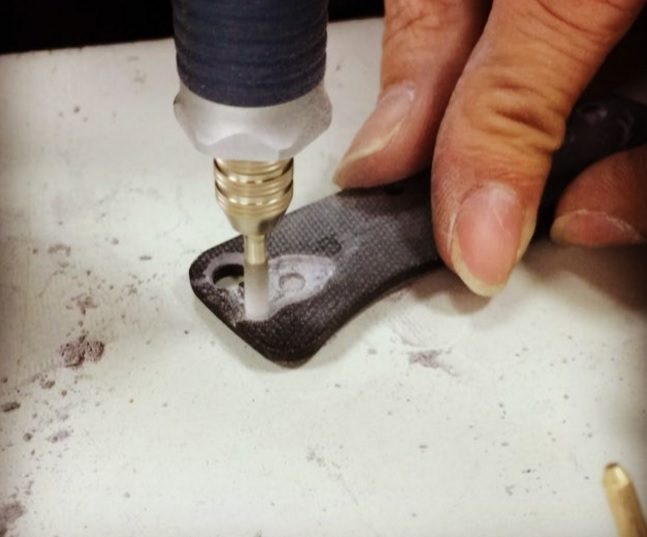
A prototype shows what a screen can't: how the knife balances, how the handle sits in the hand, how smoothly the blade opens and how the lock engages. Small details such as the strength of the detent are tuned here.
4. Sample approval
When the prototype is right, we make a sample with the final materials, finish and logo for you to approve. The approved sample is the reference that production is checked against.
5. Production and packing
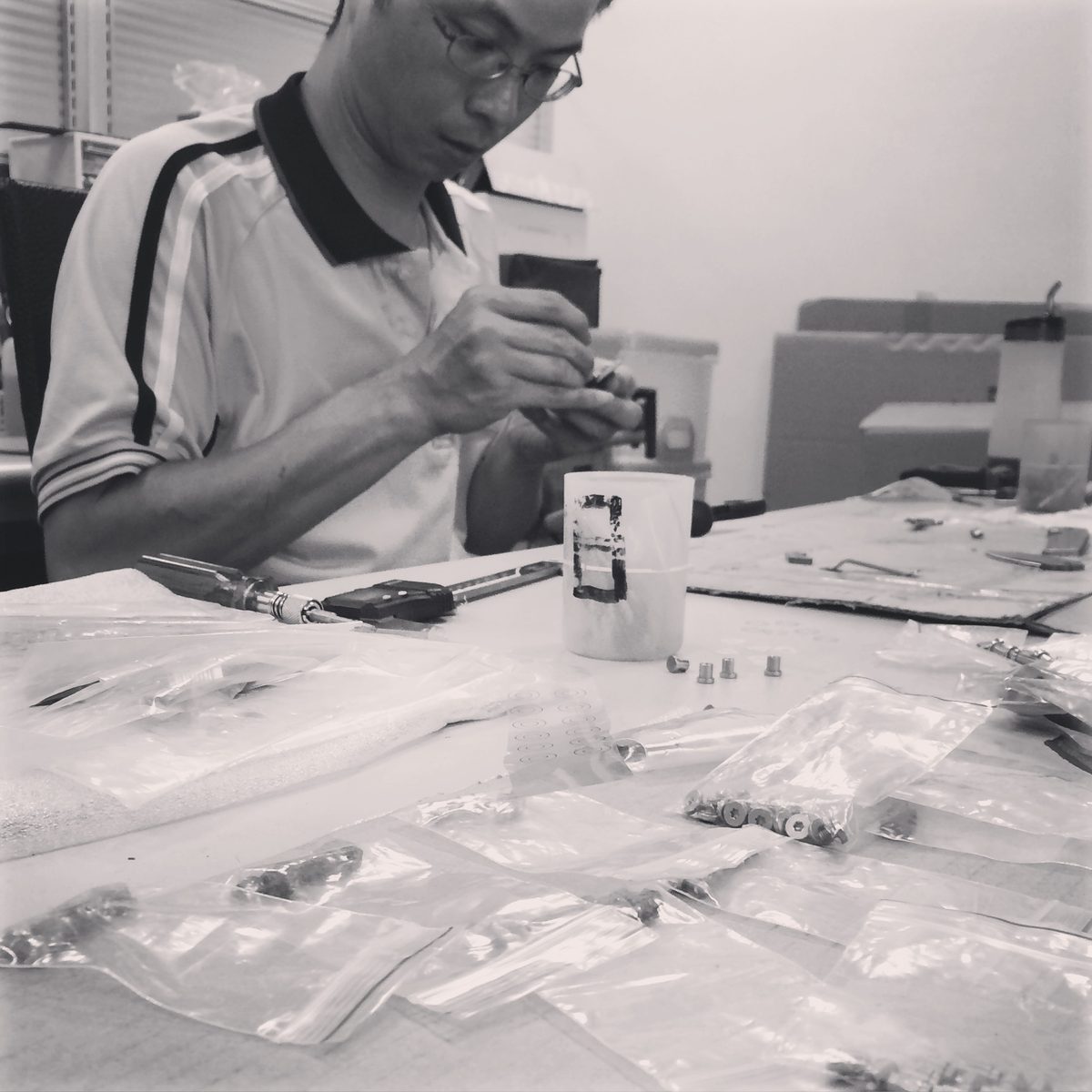
After you approve the sample, production typically takes 45 to 60 days. Folding knives are assembled by hand, then cleaned and oiled before they go into your chosen packaging.
What you send and what you get at each stage
| Stage | You send | You get |
|---|---|---|
| Brief | Drawing, sketch, photo or model number, plus your changes | Our questions and suggestions |
| 3D design | Feedback on the rendering | A 3D rendering of the knife, open and closed |
| Prototype | Feedback on feel and function | A working prototype |
| Sample | Your approval | A sample with final materials, finish and logo |
| Production | Your order and packaging artwork | Finished, packed knives, typically 45 to 60 days after approval |
Ready to start? Send us your idea, even if it's only a sketch.
Questions
Can you make a knife from my drawing?
Yes. Send a drawing, rendering, sketch, photo or sample and we turn it into a 3D design and then a prototype.
Do I see the design before a prototype is made?
Yes. You approve a 3D rendering of the knife first, so changes are made before any steel is cut.
How long does production take after the sample is approved?
Typically 45 to 60 days.
More from the blog
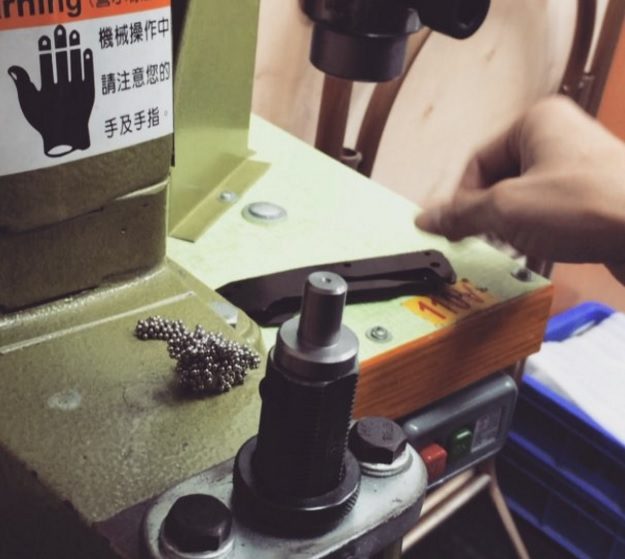 What is the detent on a knife? Liner lock detent balls explainedThe small steel ball that keeps a folding knife shut: how it works, why tension matters, and how we set it.
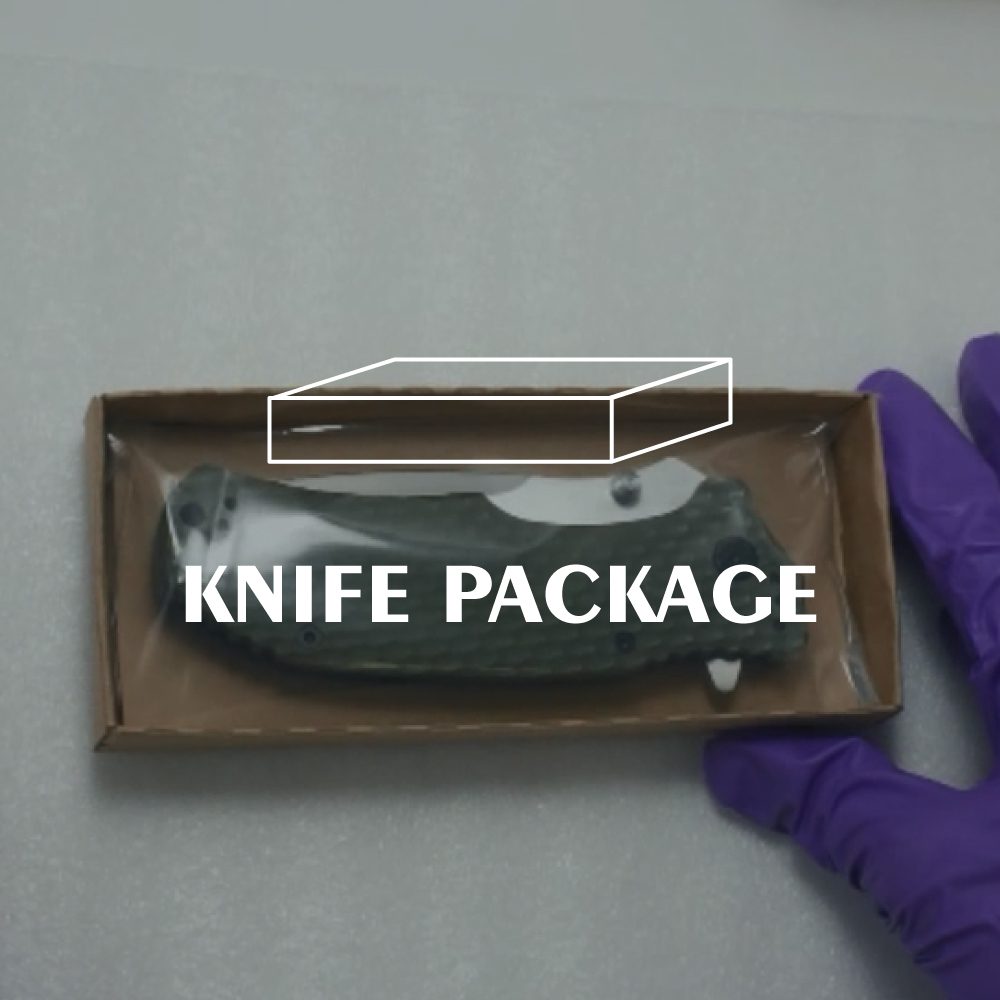 Knife packaging for your brand: boxes, blister packs and gift boxesHow we pack knives for export, and the box, blister, display and gift packaging you can choose for your brand.
 Full tang kukri: what it's used for and how we make oneWhy the kukri chops like a small axe, why a full tang matters, and the steps from steel blank to finished knife.

