

Full tang kukri: what it's used for and how we make one
The kukri is one of the most recognisable knife shapes in the world. Its forward-curved blade comes from Nepal, where it has long been an everyday farm and household tool, and it's famous as the knife of the Gurkha regiments. Today it's a popular camp, hunting and survival knife, and we make full tang kukris in our workshop in Taiwan.
What is a kukri used for?
The curve of a kukri puts weight towards the front of the blade. That lets it chop like a small axe and still work as a knife. Campers use it to clear brush, split kindling and cut branches. Hunters use it for heavier work such as cutting through bone, and the narrower part of the blade near the handle still handles finer cuts.
Why a full tang matters
On a full tang knife, the steel of the blade runs the whole length of the handle, with the handle scales fixed on either side. There's no weak joint between blade and handle, so a chopping blow is taken by one solid piece of steel. For a knife built to chop, that matters more than on almost any other design. Our kukri is made from strong carbon steel with a full-length tang.
How we make a kukri
The photo shows a batch of kukri blanks. The blade profile is cut, with the holes for the handle scales and the saw teeth on the spine.
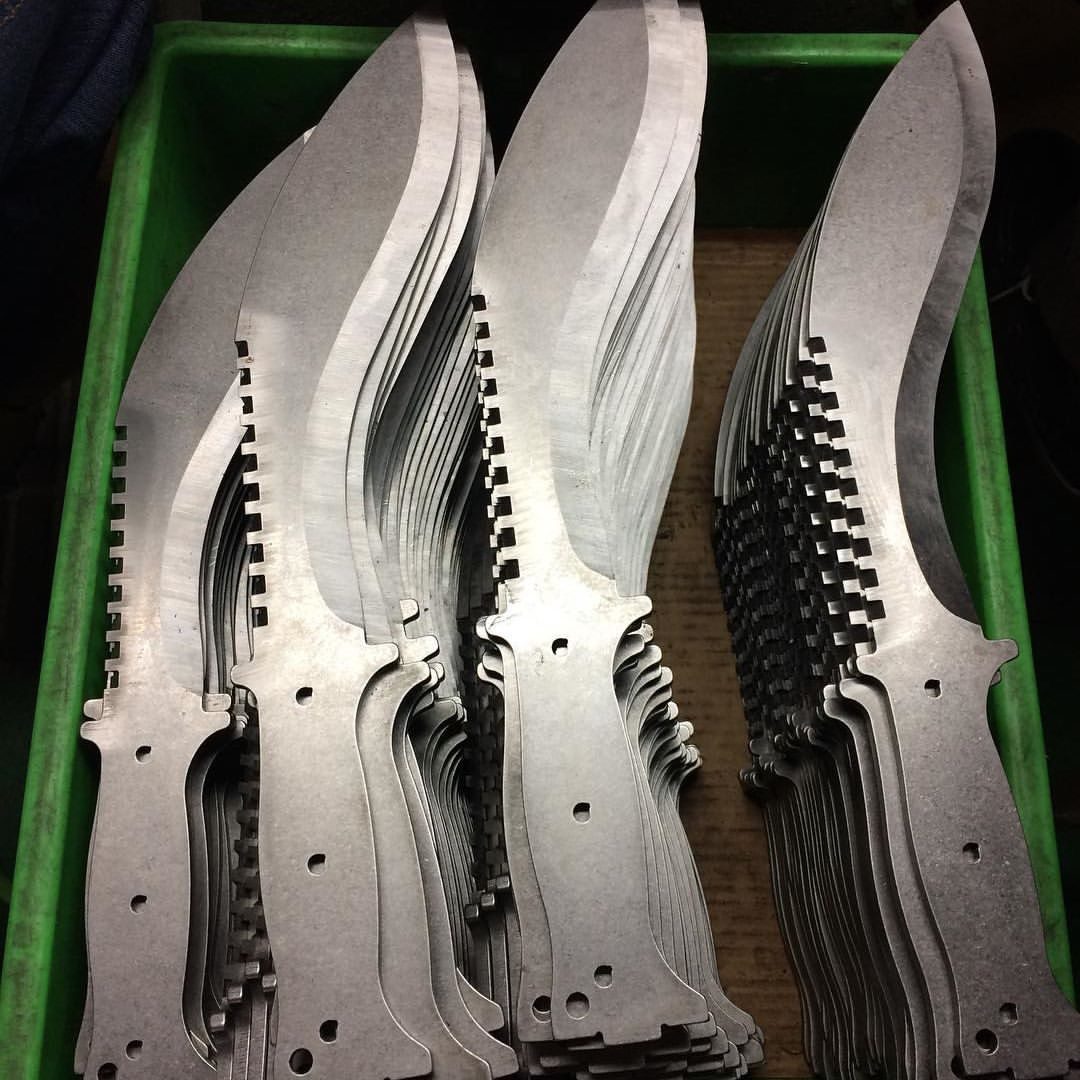
From there, the main steps are:
- Heat treatment hardens the carbon steel so it holds an edge and stands up to chopping.
- Grinding and saw teeth. After heat treatment, we hollow grind the edge and mill the saw teeth on the spine.
- Tumbling evens out the surface of the blade before it's coated.
- Finish. A Teflon coating, or another finish, protects the carbon steel against rust.
- Handle. The handle scales are fitted to the full tang.
The coating is important on a kukri. Carbon steel is tough and easy to sharpen, but it rusts more easily than stainless steel, and a chopping knife spends a lot of time outdoors.
A kukri for your brand
Like our other knives, the kukri can be customised: blade finish, handle material and colour, logo and sheath. See every part you can customise, browse our hunting knives, or send us an enquiry.
Related models
 Large size high carbon steel satin blade hunting knife 501View model
 Stainless steel saw back hunting knife 510View model
 High carbon steel sawback fixed blade hunting knife 504View model
Questions
What is a kukri used for?
Chopping: clearing brush, splitting kindling and cutting branches, plus heavier hunting work. The forward curve puts weight at the front of the blade so it chops like a small axe.
What does full tang mean?
The blade steel runs the full length of the handle, with handle scales fixed on either side, so there is no weak joint between blade and handle.
Why is a carbon steel kukri coated?
Carbon steel is tough and easy to sharpen but rusts more easily than stainless steel. A Teflon or similar coating protects it.
More from the blog
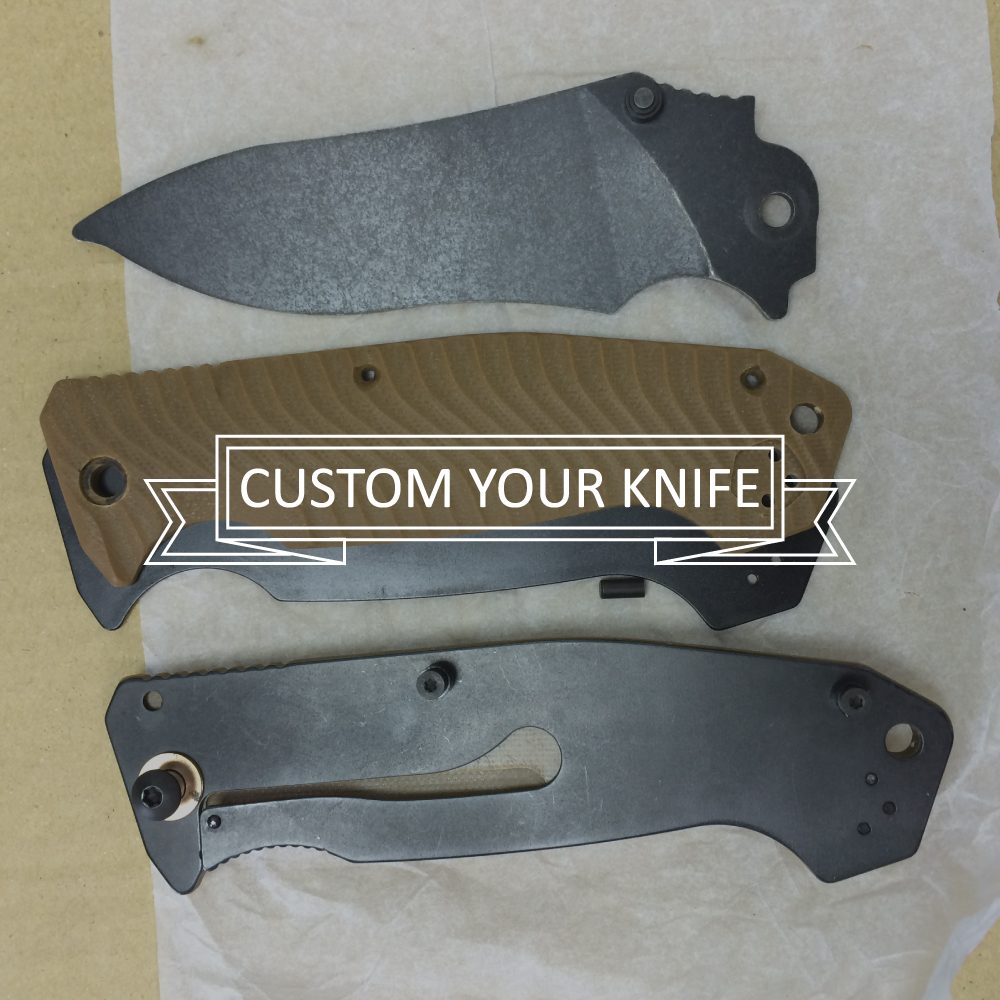 Spring assisted knives vs switchblades: how assisted opening worksHow an assisted opener works, how it differs from a switchblade, and what our assisted folders are made from.
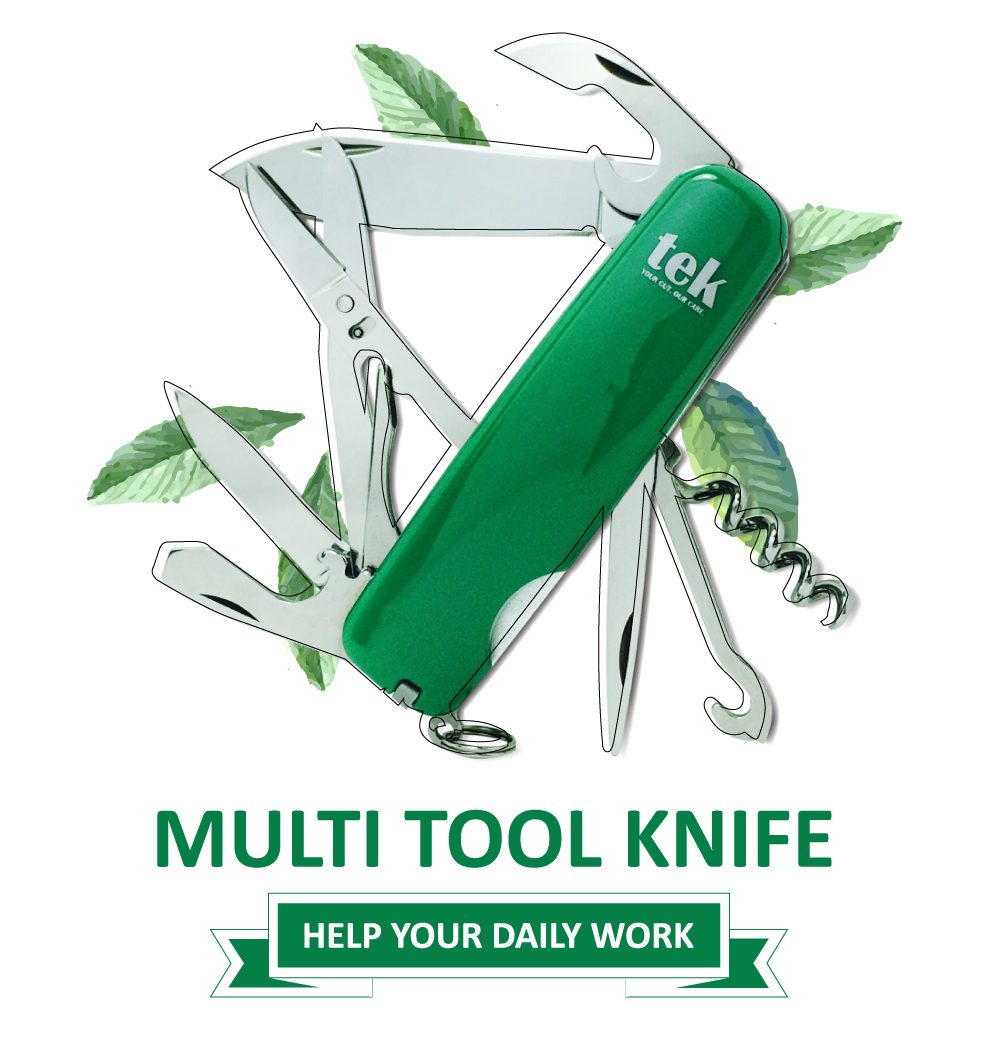 Multi-tools with your company logo: choosing the right modelTool counts, sizes and weights compared, and how to pick a multi-tool that carries your logo.
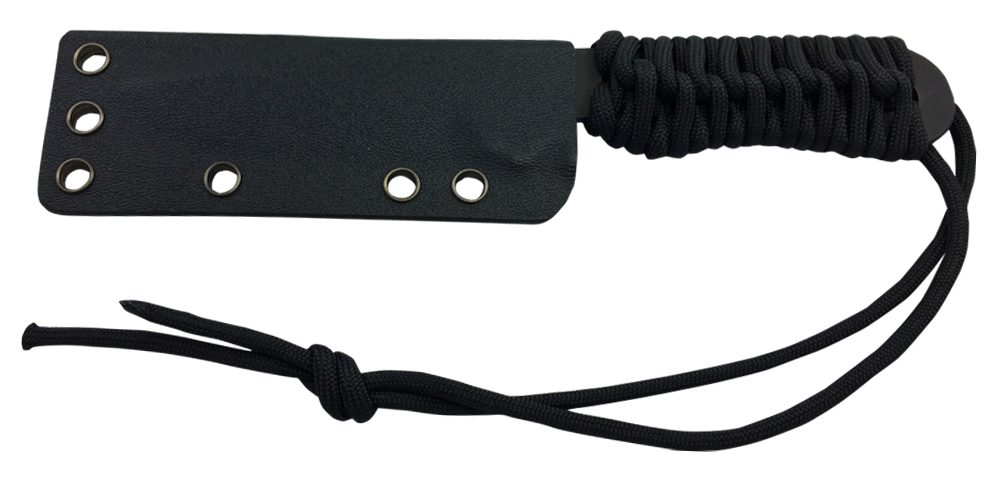 What makes a good neck knife? Our D2 neck knife with Kydex sheathWhat to look for in a neck knife, and the details of our model 521 with D2 steel and a Kydex sheath.

